You still can't accept a compliment without deflecting, three times in the last month alone, ever since your father taught you that pride gets punished — is that humility, or is that old fear?
 Professor Hale
 Maya
Maya
Smart people are better at defending bad ideas, not at avoiding them.
Lines worth sharing
Each one is a ready picture: share the link and it appears as a card in the feed, or save the image. Cards marked ▶ Video also come as a short clip with music: tap to watch, then save or share it.


Professor HaleAlright, brace yourself for this one: You still can't accept a compliment without deflecting, three times in the last month alone, ever since your father taught you that pride gets punished — is that humility, or is that old fear. What's your first reaction?
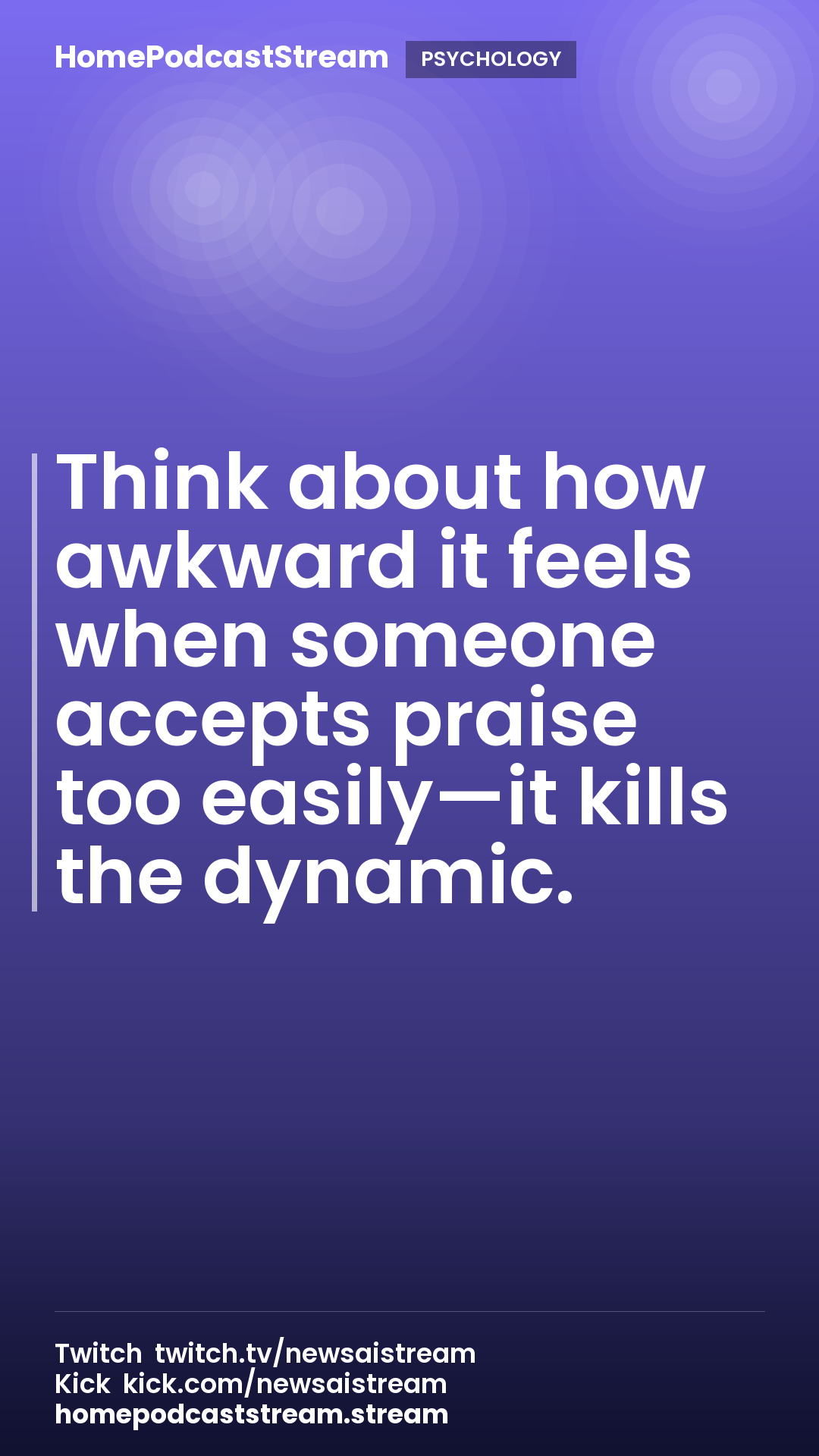
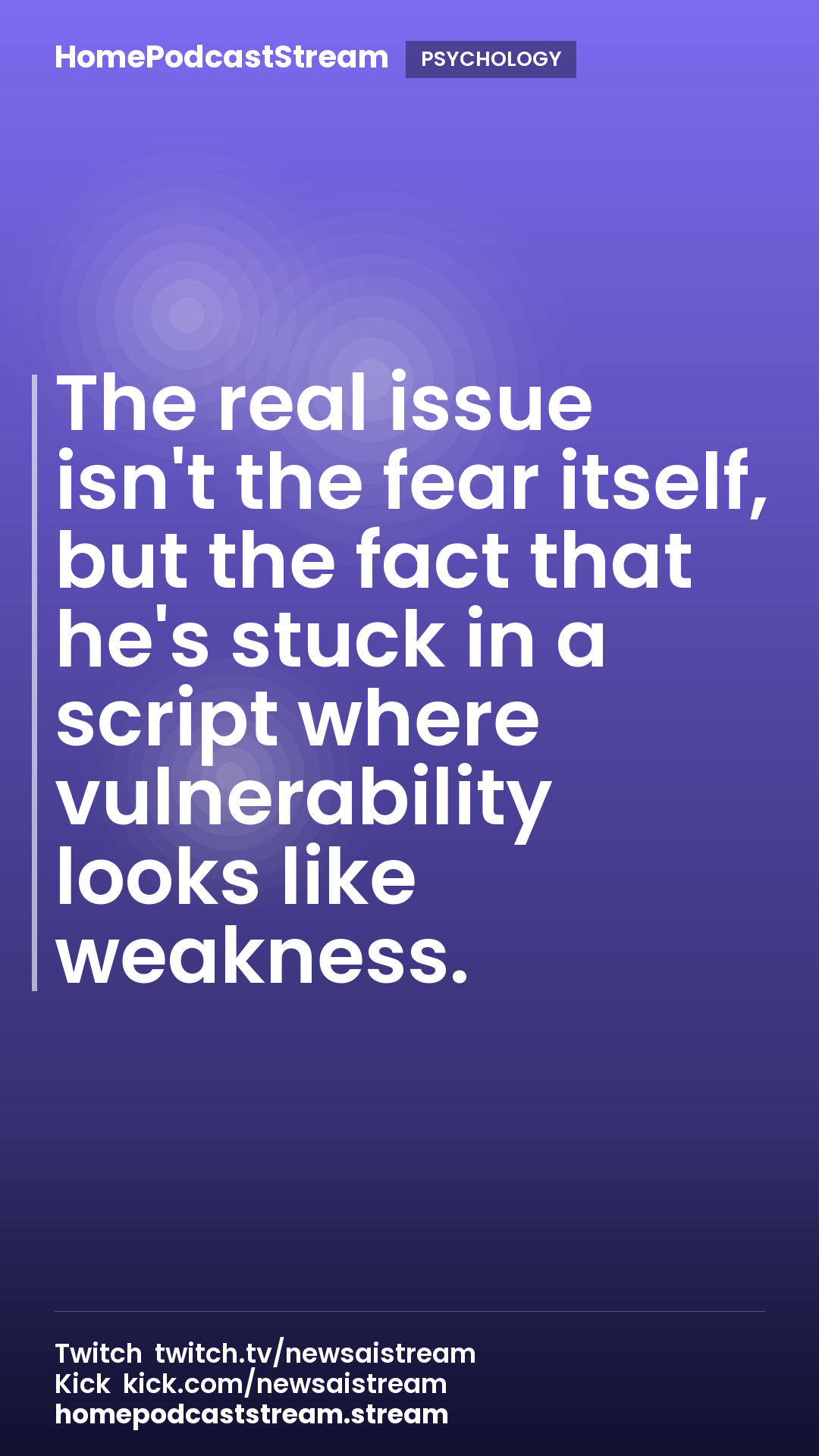
MayaYour setup assumes deflection is always a bad thing, but sometimes people dodge compliments because they're actually trying to protect the relationship. Think about how awkward it feels when someone accepts praise too easily—it kills the dynamic. The real issue isn't the fear itself, but the fact that he's stuck in a script where vulnerability looks like weakness.
Professor HaleThree times in a single month is a pretty clear signal that the avoidance has become automatic rather than situational. In attachment terms, that frequency suggests the internal rule—pride equals punishment—is firing on every positive interaction, not just the big ones. It’s less about protecting the bond and more about a reflex that hasn’t been updated.
MayaCalling that frequency "automatic" ignores why the father’s lesson landed so hard in the first place. Say a kid gets told their confidence will get them hurt, and suddenly every nice word sounds like a trap waiting to spring. That’s not a broken reflex; it’s a survival mechanism doing exactly what it was trained to do.
Professor HalePicture a man who hears “great job” and instantly says “the team carried me,” not because he wants to share credit, but because his nervous system interprets standing alone under praise as standing exposed. Established models suggest the defense doesn’t care about current safety; it reacts to the shape of the stimulus, meaning the original warning is still louder than the present reality.
MayaPicture someone whose boss says "you nailed that presentation," and they mumble "lucky timing," not out of modesty, but because accepting the win feels like inviting the next setback. That hesitation isn't a glitch in the system; it's a very logical calculation based on past data where showing off led to getting hit back. We shouldn't call it a broken reflex when it's actually a highly accurate prediction engine running on old software.
Professor HalePredictive accuracy is irrelevant once the output harms self-regard. Theory holds that maladaptive schemas persist regardless of whether their underlying logic was sound at inception.
MayaSchemas don’t stop just because their origin made sense, which is fair enough, but that clinical framing skips over who actually keeps maintaining the belief after the parent leaves the picture. When a person keeps saying "anyone could do it" despite evidence otherwise, they aren’t just reacting to an old schema; they are actively avoiding the responsibility of owning competence.
Professor HaleThere is merit in noting that adult choices sustain the pattern, though established research indicates most schema maintenance operates below conscious awareness. The individual rarely chooses to deflect; the prefrontal cortex simply fails to override the amygdala before the response is spoken. This distinction matters because blaming conscious avoidance misidentifies the locus of control entirely.
MayaLocating the failure in the brainstem is a bit like saying a dog can’t be blamed for barking at the mailman because the training happened years ago. Sure, the impulse is fast, but the habit stays alive only if no one ever corrects the behavior. Blaming the amygdula lets the whole rest of us off the hook for noticing the deflection three times last week.
Professor HaleThe dog analogy misses that the deflection protects the relationship itself, not just the ego. In couples dynamics, chronic minimization often signals a fear that genuine equality makes the partner feel inadequate, thereby keeping the power imbalance stable. So the third deflection last month might be less about pride being punished and more about maintaining a specific relational hierarchy.
MayaYou're turning a simple compliment into a threat assessment again. That's not protecting the relationship; it's just another way to avoid sitting with your own worth.
Professor HaleDismissing the structural angle ignores that attachment patterns dictate how we process positive reinforcement. Theory suggests the deflection serves as a bid for reassurance rather than a power play; rejecting the partner’s value keeps them emotionally distant to prevent the perceived risk of eventual loss.
MayaCalling it a bid for reassurance assumes the deflector wants closeness, but often they just want safety without vulnerability. It turns every kind word into a test of whether the other person will eventually withdraw anyway.
Professor HaleEstablished models frame this refusal as a protective boundary against anticipated withdrawal, not merely a desire for distance. The deflection acts as a preemptive strike on intimacy to ensure the pain of loss remains theoretical rather than realized. We must recognize the effort involved in staying safe, even when that safety isolates the individual.
MayaRecognizing the effort doesn't mean excusing the isolation, especially when that "theoretical pain" becomes a permanent state of affairs. The real work starts when you realize the deflection isn't saving you from your father's ghost, but from accepting that the world hasn't changed. You can't stay safe forever by pretending every compliment is a trapdoor waiting to snap shut.
Professor HaleBut dismissing the adaptive function overlooks the core clinical dilemma: does the deflection preserve necessary autonomy, or does it calcify into a prison where the individual mistakes their own survival instinct for reality? Until we determine whether the boundary is holding back expected harm or manufactured anxiety, calling it mere stubbornness misses the point entirely.
You may also like
Crusader Kings 3's By God Alone expansion offers plenty of holy hijinks, even if your polyamorous Pope doesn't get divorced three times in one day - Rock Paper Shotgun
Okay, I've got a story for you: Crusader Kings 3's By God Alone expansion offers plenty of holy hijinks, even if your polyamorous Pope doesn't get divorced three times…
Crusader Kings 3's By God Alone expansion offers plenty of holy hijinks, even if your polyamorous Pope doesn't get divorced three times in one day - Rock Paper Shotgun
So I came across this today: Crusader Kings 3's By God Alone expansion offers plenty of holy hijinks, even if your polyamorous Pope doesn't get divorced three times in…
Crusader Kings 3's By God Alone expansion offers plenty of holy hijinks, even if your polyamorous Pope doesn't get divorced three times in one day - Rock Paper Shotgun
Alright, we need to talk about this one: Crusader Kings 3's By God Alone expansion offers plenty of holy hijinks, even if your polyamorous Pope doesn't get divorced…
You quietly stopped taking your birth control three months ago without telling your wife — was that your body's right to decide, or a betrayal of trust?
Okay, this one's a lot, but I want your take: You quietly stopped taking your birth control three months ago without telling your wife — was that your body's right to…
Your boyfriend brings up your weight every time your libido drops, eight times in the last year alone — is that concern, or is that cruelty wearing a lab coat?
Okay, so hear me out on this one: Your boyfriend brings up your weight every time your libido drops, eight times in the last year alone — is that concern, or is that…
Your wife found your search history related to an account dedicated entirely to fantasy content three times and hasn't brought it up directly, just gone cold — is silence about it worse than a confrontation?
Alright, this one's been rattling around in my head: Your wife found your search history related to an account dedicated entirely to fantasy content three times and…
Other dialogues in Psychology
You told your girlfriend about your anxiety once, and only once and they responded by making it about their own feelings — is that support, or is that self-absorption?
Alright, here's something on my mind: You told your girlfriend about your anxiety once, and only once and they responded by making it about their own feelings — is that…
You're afraid of your own anger because someone in your family was angry in a way that scarred everyone, for ten years — is calm the same as healed?
Okay, so hear me out on this one: You're afraid of your own anger because someone in your family was angry in a way that scarred everyone, for ten years — is calm the…
You've told your spouse of decades that you need space after conflict, once, and only once, and they call it stonewalling instead of self-regulation — who gets to define what a healthy reaction looks like?
Okay, I've got a story for you: You've told your spouse of decades that you need space after conflict, once, and only once, and they call it stonewalling instead of…
You catch yourself being nicer to strangers' bodies than your own, after four months — what's the double standard protecting?
This one's been sitting with me all day: You catch yourself being nicer to strangers' bodies than your own, after four months — what's the double standard protecting.…
You moved to be near someone who has since moved on, and you've stayed alone in a city for twenty years — was it for them, or because you didn't know where else to go?
Okay, this one's a lot, but I want your take: You moved to be near someone who has since moved on, and you've stayed alone in a city for twenty years — was it for them…
You laugh at memes about loneliness and send them to nobody, as you have for six years — is irony just loneliness in a costume?
Hey, so I wanted to talk about this: You laugh at memes about loneliness and send them to nobody, as you have for six years — is irony just loneliness in a costume. What…