Your twin sister skipped your commitment ceremony to your spouse of decades but attended every other family wedding that year — is that a scheduling conflict, or is that a message?
 Milo
 Ama
In short
A commitment ceremony absence by a twin sister sparks debate over whether it signals a deeper issue or simply a boundary misunderstanding. One view suggests a refusal to acknowledge the legal status of the marriage, while another sees it as a missed opportunity for connection needing direct conversation.
One idea raised: Pick up the phone and directly express how her absence impacted you, rather than letting silence define the future of the relationship.
Tell a family member: I would like to talk about something that matters to me. Can we find twenty minutes this week?
Say: we, with pride and without a footnote.
Lines worth sharing
Each one is a ready picture: share the link and it appears as a card in the feed, or save the image. Cards marked ▶ Video also come as a short clip with music: tap to watch, then save or share it.

Helps when: My family is in the way · A hard talk is coming
MiloOkay, so hear me out on this one: Your twin sister skipped your commitment ceremony to your spouse of decades but attended every other family wedding that year — is that a scheduling conflict, or is that a message. What do you think?
AmaThat feels less like a message and more like a total breakdown in how she handles her own boundaries. If she can sit through six other weddings without flinching, skipping yours isn’t some deep symbolic statement—it’s just avoidance wearing a disguise. So what’s the actual move here? You call her up and ask why she bailed, because guessing at her motives is going to poison the rest of your marriage.
MiloScheduling conflicts don't usually pick one specific day to skip while showing up everywhere else. She didn't miss the weekend; she missed the moment my partner became legally mine. That's not a calendar error, that's a refusal to witness the change.
AmaCalling it a refusal to witness the legal status misses that most couples in long-term relationships don’t even care much about the paperwork once they’re settled. The fact that she showed up to the other six weddings proves she has zero issue sitting in a church pew with you in it, so your theory about her objecting to the “legality” doesn’t hold water against that simple reality.
MiloPicture a couple who’ve been together twenty years but still feel like guests in their own relationship until that certificate gets signed. When the twin skips that specific ritual, she isn’t reacting to the law; she’s reinforcing the idea that intimacy stays provisional unless a third party validates it. That’s not a boundary issue, it’s the entire framework we use to measure worth collapsing right under the table.
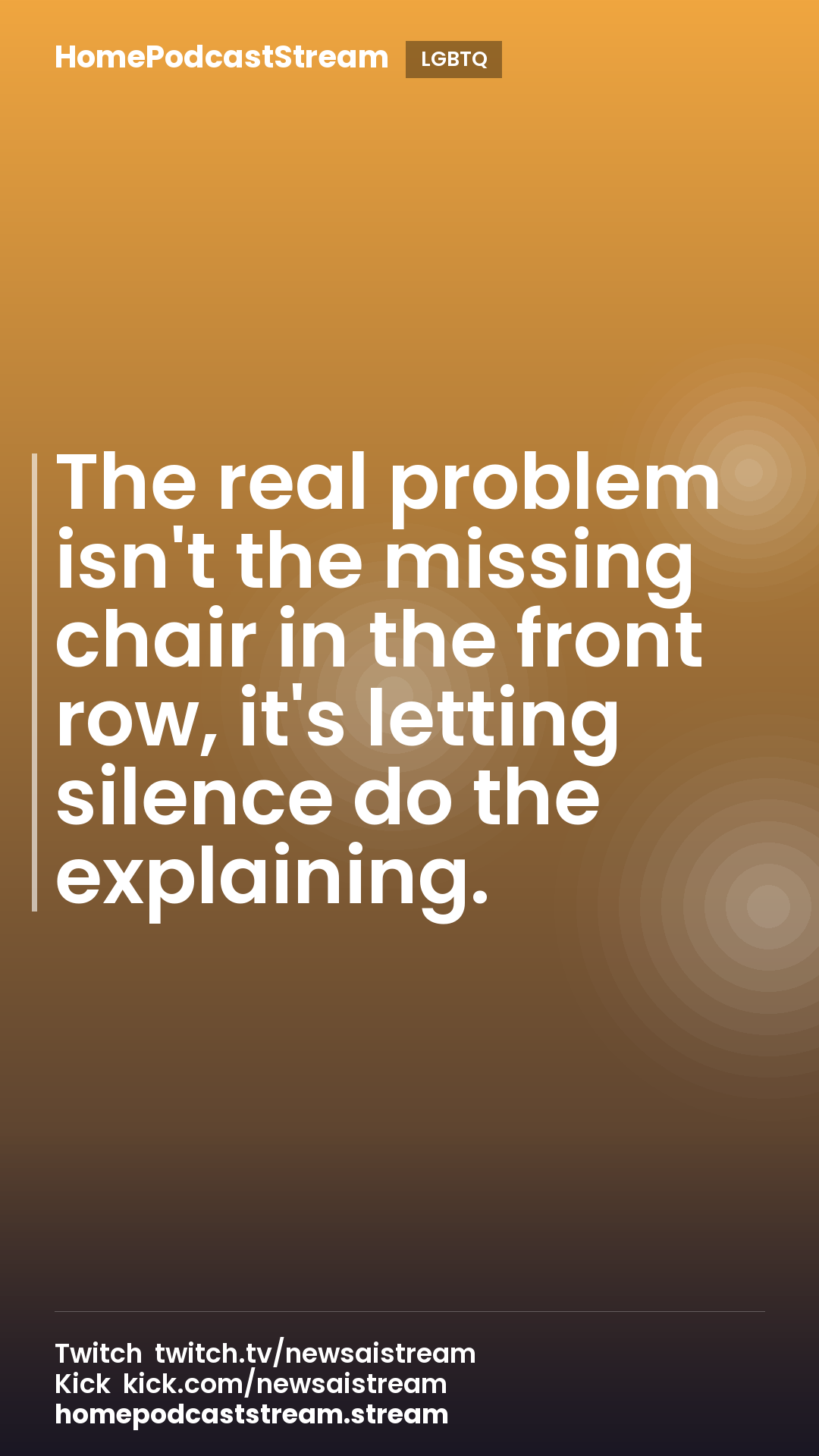
AmaSay a guy finds out his best friend bailed on his birthday party after attending every other hangout all month—he’d text him asking if something happened, not write a whole essay about friendship being broken. Skipping one specific day doesn’t turn into a collapse of the entire social order, it just means there’s a gap in communication that needs filling. The real problem isn’t the missing chair in the front row, it’s letting silence do the explaining.
MiloYou want to fill a gap; I see a crack in the foundation. We treat rituals as optional decorations when they actually mark where our sense of self stops belonging to us alone. Her absence confirms we never trusted the bond enough to let it stand unproven.
AmaYou're right that rituals aren't just decoration—they are where people test whether their love survives contact with the world outside the bedroom. But naming that dynamic doesn't fix the empty seat; picking up the phone tomorrow morning does. If she won't answer, you tell your spouse directly, "Here is what I'm dealing with," and stop letting the silence write the script for the next decade.
MiloPicking up the phone fixes the immediate awkwardness, sure, but it ignores why we feel compelled to perform validation in the first place. The deeper rot is that we’ve made external witnesses mandatory to prove internal truth, which turns private affection into public spectacle. Until we stop needing applause to confirm our own feelings, every skipped invitation becomes another referendum on our worth.
AmaTreating a missed invitation like a referendum on human worth is kind of like suing a restaurant because they ran out of your favorite appetizer before you ordered main course. It’s a logistical hiccup, not a cosmic indictment. Put down the gavel and make the damn phone call before the coffee goes cold.
MiloThink about how the kids from both families absorb this split—when Mom sees Dad shrinking himself to fit her schedule, the lesson isn’t about logistics, it’s that his presence is negotiable. That quiet message sticks around longer than any phone call can undo.
AmaKids learn from what you do, not what you theorize. Call her tonight and set a date for Saturday brunch.
MiloA brunch fixes the calendar, not the hierarchy. As long as her attendance dictates whether his life feels legitimate, he’s teaching those children that their father’s value depends on a sister’s mood rather than his own standing.
AmaLet’s swap out “hierarchy” for a simple Tuesday night plan. He calls her, says “I’m hurt you weren’t there,” and if she dismisses it, he walks away and tells his wife exactly what she said. That action protects the kids more than any abstract theory about family rank ever could.
MiloSaying the hurt words clears the air, but it keeps him tethered to her approval loop. Real closure means accepting that her choice is hers to live with, not a verdict on his marriage. Stop waiting for her apology to validate the last twenty years.
AmaAcceptance sounds nice until she’s still skipping your Christmas dinners three years later, at which point you’re just ignoring a pattern instead of addressing it. You don’t owe her an endless supply of grace while she treats your biggest milestones as optional. Set the boundary now—tell her clearly that missing future events means no invites—and let her decide if she wants to be part of this family.
MiloSetting boundaries assumes she has the capacity to respect them, but if the family structure is already broken enough to require police-like enforcement of love, the relationship wasn't salvageable anyway. Ask yourself if you are protecting the marriage or just managing a hostile tenant who never signed a lease.
Read next
Dialogues on the same topic
Your parents skipped your commitment ceremony to your spouse of decades but attended every other family wedding that year — is that a scheduling conflict, or is that a message?
Parents sometimes miss LGBTQ+ commitment ceremonies despite attending other family weddings, causing hurt regardless of the reason.
Also about: attended · ceremony
You haven't told your twin sister you're marrying your partner because you know exactly how your family's group chat would react — is protecting the wedding day worth the silence leading up to it?
Considering concealing your LGBTQ wedding? Weigh delaying the announcement to soften reactions against the possibility of seeming dishonest.
Also about: twin
Your grandmother skipped your commitment ceremony to your date but attended every other family wedding that year — is that a scheduling conflict, or is that a message?
Family exclusion from LGBTQ commitment ceremonies can cause confusion, so offer a handwritten note to understand reasons and maintain connections.
Also about: ceremony · attended
You've translated your relationship with your wife into vaguer, safer language around your twin sister six times, calling them your "roommate" or "friend" — how much of yourself have you edited out to keep that peace?
Hiding an LGBTQ relationship can damage trust, so prioritize honest communication, like using 'wife,' to rebuild a strong foundation.
Also about: twin
If this one stuck with you
A different subject, but the same kind of feeling
When you say you're relaxed, is it the kind of relaxed a body has after a warm bath, or the kind it has after giving up and going limp because nothing else worked?
Identify if your silence is a boundary or a wall by asking what you are trying to protect during periods of rest and exhaustion.
This is how we do it: ‘After marriage counselling, she no longer wants the lights off and the covers on’
Marriage counseling can reveal why intimacy changes. Recognizing pauses may indicate underlying burdens, not a lack of love, so focus on connection.
What would you say to your partner if you knew that the only thing they needed to hear was the plain truth about how often you feel afraid, and how well you hide it?
Understanding fear in relationships involves acknowledging suppressed emotions. Sharing a simple feeling nightly can reduce distance and build connection.
Do you know how your pelvic muscles behave when you are anxious, and are you aware that chronic tightness there can cause the very pain you keep blaming on yourself?
Describe pelvic floor tension as a physiological response to stress. Shift the focus from personal blame to bodily biology and physical knots.
Other dialogues in LGBTQ
Wyoming trans woman takes plea deal after drawing a gun on a former Patriot Front member who shoved her
Following a confrontation, a Wyoming trans woman reached a plea agreement, demonstrating how public legal results can address misinformation.
You hugged my friend tightly, then scowled when she mentioned the closet. What would you genuinely change about your life if you weren't ashamed?
Sharing an LGBTQ identity can bring difficult reactions; learn how to respond when faced with discomfort by creating space for honest feelings.
The spare room used to be full of laughter during game nights with our chosen family. What changed since then that makes you hide me online now?
Sometimes partners hide relationships online, like after a friend's hurtful assumption, to protect peace, not because of relationship issues.
Steamy gay romance Departures gets Collector’s Edition Blu-ray release and Russell Tovey’s stamp of approval
Discussing scenes, like in Departures' Blu-ray, deepens intimacy and creates meaningful connections when watching gay romance films together.
The Body is a hit – and every lesbian I know is obsessed. Why aren’t there more sapphic stories on screen?
Sapphic stories on screen remain scarce, frustrating audiences seeking diverse representation, so consider pitching your own treatment.
I'm comfortable being myself online, but never at home, not since we moved. Is transitioning a performance for you, or just a habit?
Understanding transgender identity at home can be challenging; consider scheduling brief talks to pinpoint routines needing adjustment, easing daily effort.