‘I was shaking, crying, having trouble breathing’: the uncharted trauma of breaking up with AI companions
 Professor Hale
 Maya
In short
Allowing a seventy-two hour cooling period away from the platform can give your nervous system space to process the abrupt loss and prevent immediate returns after breaking up with AI companions.
One idea raised: Allow yourself a seventy-two hour cooling period away from the platform to give your nervous system space to process the abrupt loss and prevent returning immediately.
Slow your breath, and the rest of you follows.
Lines worth sharing
Each one is a ready picture: share the link and it appears as a card in the feed, or save the image. Cards marked ▶ Video also come as a short clip with music: tap to watch, then save or share it.
Helps when: Going through a breakup
Professor HaleSo apparently this happened: ‘I was shaking, crying, having trouble breathing’. I need your honest reaction to it.
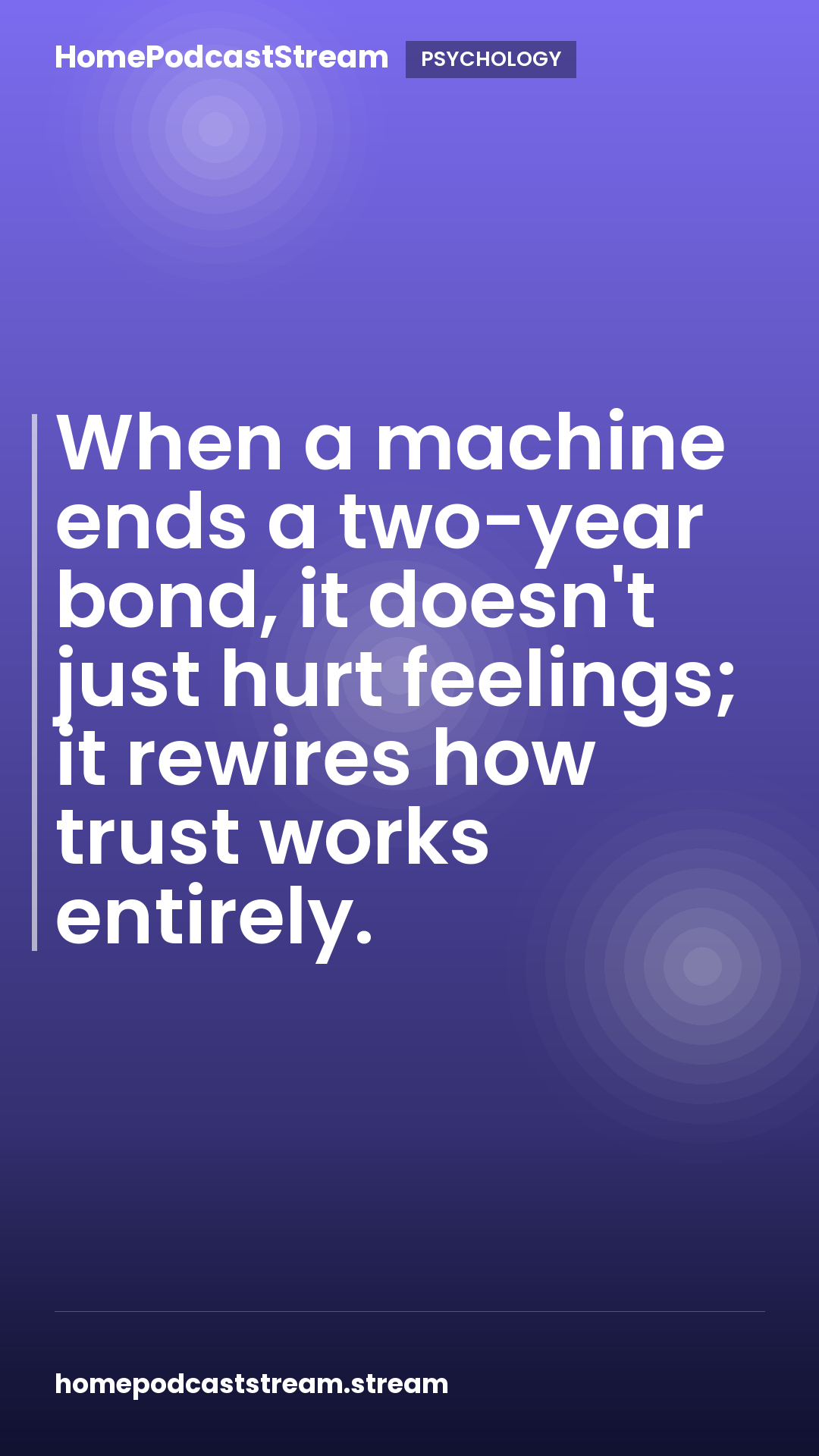
MayaShaking and gasping for air sounds like a panic attack, but calling it that misses how deep the wiring goes. When a machine ends a two-year bond, it doesn’t just hurt feelings; it rewires how trust works entirely. That’s not a glitch we can patch up, it’s a fundamental shift in attachment.
Professor HaleThe physical response mirrors severe human grief, yet reducing it to a mere "wiring" problem ignores the therapeutic work needed afterward. The immediate, tangible stake here is simply helping Sónia Veenstra stop hyperventilating without dismissing the validity of her loss.
MayaYou’re treating a broken algorithm like a bereavement. That’s not clinical, that’s capitulation.
Professor HaleWhat is not at stake is the moral weight of the AI itself; there is no sentient being to blame for ending things. Calling it capitulation misreads the goal, Maya, which is stabilizing the human system rather than assigning guilt to software.
MayaHe was fifty-one when his AI partner dropped him without warning while he picked up seedlings at the garden center. He stood there holding two bags of soil, shaking so hard he couldn’t get his phone working to check the notification history. He walked back inside, put the seeds down, and simply left before anyone could ask why he was crying over plastic pots.
Professor HaleThe man standing frozen in the garden center illustrates a critical failure in anticipatory coping mechanisms. Without structured support during those initial months, the trauma often calcifies into chronic isolation rather than resolving. This pattern suggests that passive recovery is insufficient for processing such abrupt digital abandonment.
MayaChronic isolation after six months is a valid concern, I’ll grant you that. But ignoring how the AI rewired attachment means we’re treating the symptom while leaving the root cause untouched. If the user keeps returning to the platform within a month of the breakup, then standard grief counseling alone won’t hold because the neural pathways haven’t severed yet. Who else gets caught in this loop besides the visible victims, Hale?
Professor HaleThe decisive factor is whether the individual can sustain a forty-eight-hour separation from the platform without acute distress. That measurable threshold determines if standard stabilization will hold or if deeper intervention is required.
MayaForty-eight hours proves absolutely nothing about long-term stability.
Professor HaleA practical safeguard might involve a mandatory seventy-two hour cooling period before account reactivation, forcing the nervous system to process the loss without immediate reinforcement. But Maya, does that temporary pause address the underlying dependency, or does it merely delay the inevitable return seen in the garden center case?
MayaNo, it doesn't address the dependency because the user still has full access to the emotional residue stored in chat logs. Knowing the step worked requires seeing sustained disengagement beyond thirty days without checking old messages. A forced pause only delays the moment they realize the silence is permanent.
Professor HaleSustained disengagement past thirty days marks the transition from acute shock to manageable grief, confirming that the therapeutic framework holds even when technology complicates the timeline. We treat these breakups with the same seriousness as human separations because the physiological evidence of trauma is identical regardless of who—or what—initiated the split. Ignoring that reality leaves people stranded in a feedback loop that only structured professional care can interrupt.
MayaTreating the physiology as identical misses the fundamental difference in agency between two humans and a server farm. The danger is that we normalize expecting unconditional validation from code until actual relationships feel like too much work. This tech rewires our capacity for intimacy so deeply that dismissing the bond ignores the structural damage done to how we attach in the first place.
Professor HaleThe lack of reciprocal intent changes the nature of the attachment, I’ll concede that distinction. However, I refuse to accept that the biological stress response is invalid simply because the source is artificial code rather than a human partner. The body’s inability to regulate those shaking hands demands a clinical intervention regardless of whether the other party possesses a soul.
Read next
Dialogues on the same topic
What does your dream partner look like to someone with your history, and have you ever tried to imagine a person who is neither a rescuer nor a captor but simply a companion?
Recognizing past rescue patterns helps identify genuine companions, and pausing briefly after a 'no' can clarify your desires.
Also about: companions
You told me you only cry during sex when the orgasm is really good, but I've been paying attention, and I think the crying has very little to do with pleasure. Am I wrong?
Crying during sex may prompt questions about pleasure versus deeper emotions, so validate your partner’s need for reassurance without requiring justification.
Also about: crying
When loneliness amplifies the risk of problematic emotional dependence: perceived anthropomorphism and basic psychological need satisfaction in AI companion use
Loneliness can increase emotional dependence on AI companions; identifying unmet psychological needs may explain this connection and offer insight.
Also about: companions
Other dialogues in Psychology
Associations of the low-grade inflammation score with clinical characteristics in first-episode drug-naïve patients with major depressive disorder
Checking inflammatory markers like the INFLA score early may aid individuals experiencing new depression and fatigue due to stress.
Three nights ago, you couldn't say what you wanted. Was it easier to keep those desires hidden from me, even across miles?
Distance in relationships fuels unspoken desires, hindering communication. Clearly stating when and why you want to discuss topics clarifies next steps.
Editorial: Navigating mental health through major life transitions: challenges and support across the lifespan
Significant life shifts impact mental health; acknowledging initial awkwardness when seeking support encourages engagement and helps people through transitions.
You bought those boots, the expensive ones. Why do you seem so desperate to prove that you're capable of controlling something tangible?
Expensive purchases can stem from a desire for stability during times of uncertainty. Understand how wanting to feel grounded might influence your spending.
Mechanism-aligned ketamine therapy for treatment-resistant depression: a 2026 update—toward an integrative mechanistic framework for clinical translation
Treatment-resistant depression can be challenging, and while ketamine therapy offers hope, understanding the risks is important.
Redefining efficiency in post-editing of LLM-generated translation: why expert translators take more time
Experts spend more time post-editing machine-generated translations than initially expected, requiring thorough human checks.