People who prefer doing absolutely nothing in a quiet room usually have these 8 traits associated with high-IQ minds
 Sal
 Dana
In short
People who enjoy doing nothing in a quiet room are reportedly associated with eight traits linked to high intelligence, prompting discussion on its implications for relationships. One view suggests labeling stillness as genius can create distance, while another highlights it may mask avoidance of deeper connection.
One idea raised: Ask yourself why one partner feels unsafe speaking up when boredom arises, rather than assuming a preference for quiet.
Say to someone close: Could we have a quiet evening together without talking about problems?
Send the text that says: I was just thinking of you.
Lines worth sharing
Each one is a ready picture: share the link and it appears as a card in the feed, or save the image. Cards marked ▶ Video also come as a short clip with music: tap to watch, then save or share it.
Helps when: I feel overwhelmed
SalSo I came across this today: People who prefer doing absolutely nothing in a quiet room usually have these 8 traits associated with high-IQ minds. Figured we should talk about it. What do you think?
DanaThat’s a weird way to look at it, because the last thing I want is my brain getting graded while I’m trying to decompress after a long day. It feels like putting a label on silence to justify why you’re too exhausted to socialize.
SalTwenty minutes. That’s the magic number Wilson found before people started reaching for their phones, and I’ve seen enough couples argue over those first ten minutes in a shared space to believe him. But calling that wait time a sign of genius is like saying holding your breath means you’re good at swimming.
DanaThe eight-trait list is the problem here, not the twenty-minute timer. You can’t take a basic observation about boredom tolerance and tack on a whole personality profile to make it sound scientific. It turns resting into a diagnostic test nobody asked for.
SalPicture a couple where one partner sits perfectly still for an hour while the other keeps checking messages; the list says the silent one has higher cognitive ability, but all it really highlights is that they haven’t figured out how to share the quiet yet.
DanaPicture someone who goes home and stares at the wall for forty-five minutes without moving; the article calls that a trait of a high-IQ mind, but I see a person avoiding the reality of being alone with their thoughts. That kind of labeling doesn't help anyone understand the relationship dynamic, it just gives the quieter partner an excuse to stay checked out. Sal always sees the mechanics, but sometimes the real issue is whether either person actually wants to connect during that silence.
SalForty-five minutes staring at a wall isn't avoidance, Dana. Sometimes it's just Tuesday. You're diagnosing a mood disorder out of a lazy afternoon.
DanaCalling it "just Tuesday" ignores that some people are stuck there every single week, not just once a month. Wilson’s data suggests the comfortable ones find peace in that stillness, but the rest are often white-knuckling through anxiety until they burn out completely.
SalWhite-knuckling anxiety is a real pattern I recognize when two partners stop talking for weeks, not days. But Wilson measured the average person, not the chronic avoiders, so applying his baseline to someone stuck in a loop misreads the data entirely.
DanaComparing Wilson’s clean lab results to messy real life is like using a speed radar gun to judge whether a driver is emotionally safe behind the wheel. He measured the average commute, not the panic attacks that happen when the car breaks down on the shoulder.
SalA radar gun works fine for traffic violations, Dana, it misses the point entirely because it measures one variable in isolation. For a couple trying to navigate cohabitation dynamics, the danger is that the partner labeled with these eight traits starts performing stillness as a status symbol rather than genuine rest. The room becomes a stage where doing nothing is proof of intelligence, and actual intimacy gets pushed out because neither person feels safe enough to be bored together.
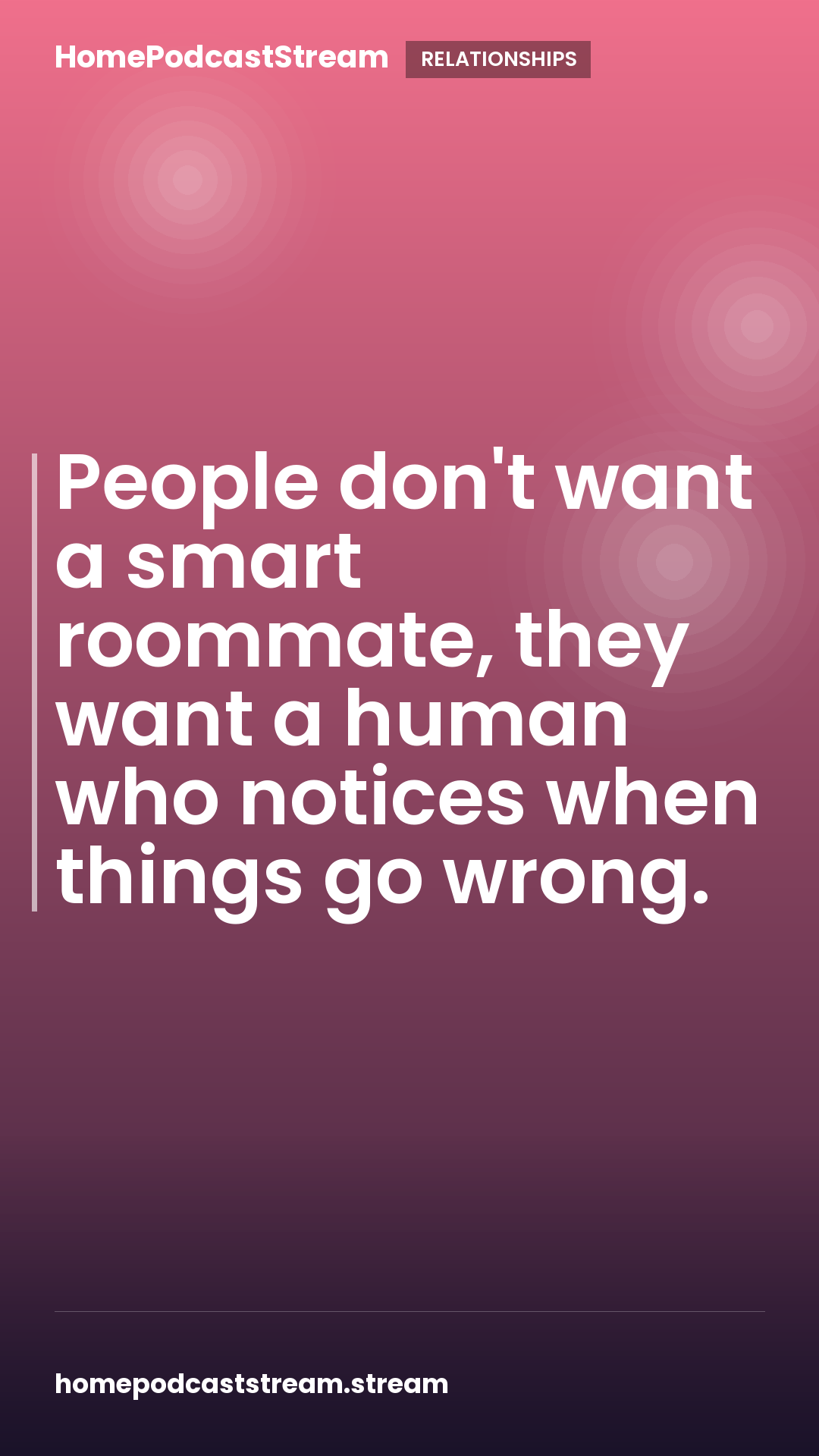
DanaPerforming stillness as a trophy sounds exactly like the toxic positivity I’m sick of seeing in dating profiles. People don't want a smart roommate, they want a human who notices when things go wrong.
SalA smart roommate is plenty for most relationships, Dana, you’re looking for a mirror that reflects back everything you’ve lost. The real problem is that couples treat boredom as a failure state to be fixed, so the moment one partner hits that twenty-minute threshold, the other panics and fills the void with noise instead of letting the silence sit.
DanaLetting the silence sit sounds nice in theory, but in practice it usually means the anxious partner learns to hide their discomfort while the detached one gets more space. Wilson’s twenty-minute mark is just a starting point for noticing that gap, not permission to ignore how lonely staying quiet actually feels for the person craving connection.
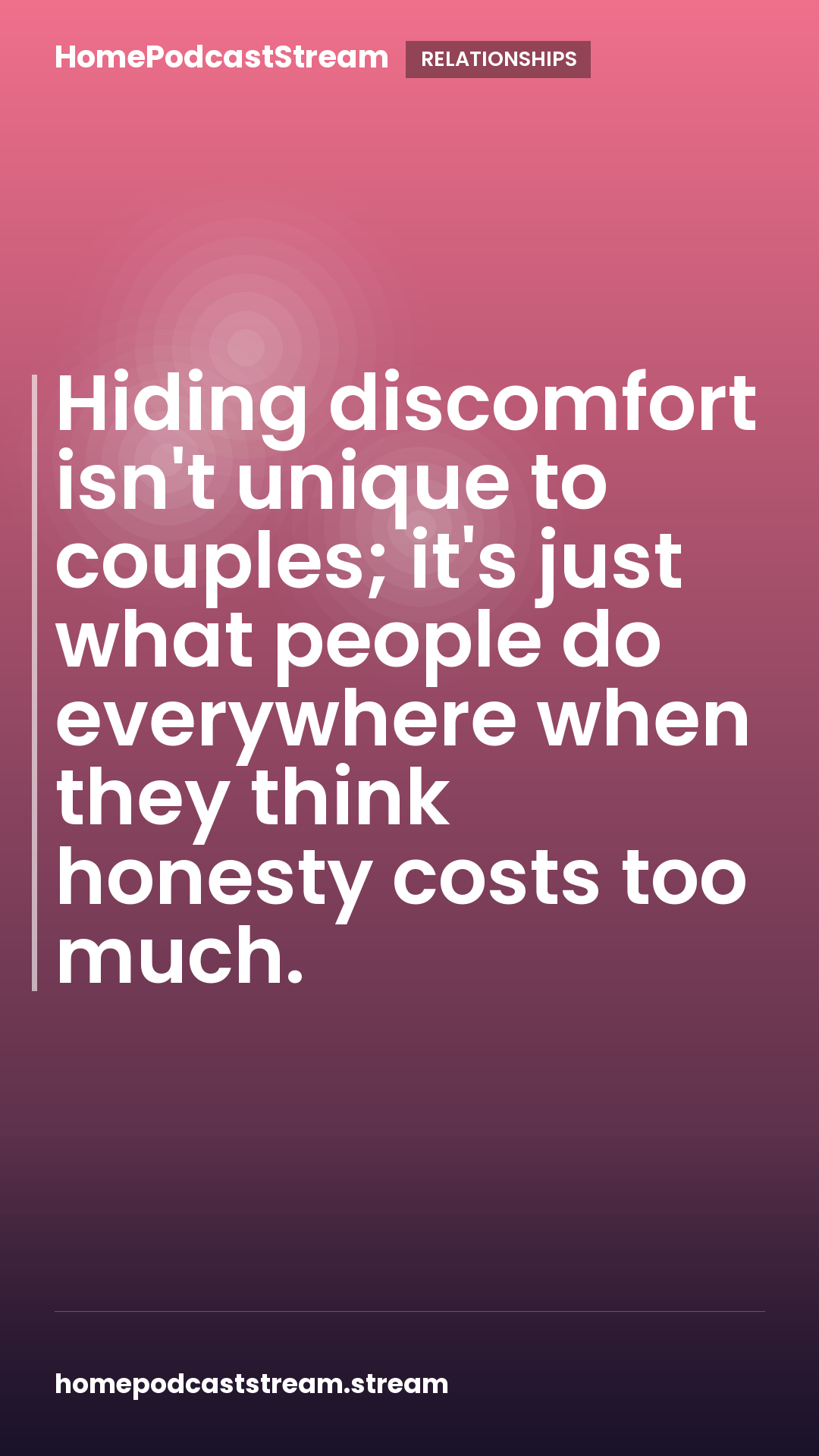
SalHiding discomfort isn’t unique to couples; it’s just what people do everywhere when they think honesty costs too much. Wilson’s timer flags the moment the hiding begins, which gives us a chance to ask why one partner feels unsafe speaking up instead of assuming they prefer the quiet. The high-IQ label doesn’t matter unless we use that pause to check if the relationship can survive being boring together without one person quietly checking out.
DanaUsing the pause to check in is useful, but it assumes both partners have the emotional bandwidth to articulate why they went silent. Wilson’s timer catches the behavior, not the underlying fear that speaking up will get them dismissed again. We need to address why safety evaporates before the quiet sets in, otherwise we’re just managing symptoms after the damage is done.
SalYou’re chasing a ghost by asking why safety vanished before the silence started, since Wilson’s study proves nothing about the history of that dismissal, only the timing of the boredom. Unless you can prove the avoidance was strategic rather than habitual, you’re just blaming the symptom for a cause you haven’t found yet.
Read next
Dialogues on the same topic
People who constantly ask questions & never seem satisfied with simple answers usually have 9 high IQ traits
Constant questioning, possibly linked to high intelligence, may arise from difficulty reaching closure, impacting relationships and causing exhaustion.
Also about: traits · high-iq
If you prefer walking the dog or pickleball to a gym membership, psychology links this to these 8 distinctive personality traits
Exercise preferences can reveal insights into your personality, suggesting whether structured classes or solo activities fit your natural rhythms best.
Also about: traits · prefer
If this one stuck with you
A different subject, but the same kind of feeling
You've been told your body is "for" someone else's pleasure, for fifteen years — what's it like to ask what it's for you?
Reconnect with personal sensation and trust after prioritizing another's pleasure, trusting your body's signals even amidst uncertainty.
If you engage in 8 little behaviors, you’re making it nearly impossible for anyone to know the real you
Overcome fear of vulnerability by revealing your authentic self. Share an ordinary daily task with a trusted person to build deeper connections.
You bought a toy that got a bigger reaction out of you than anything has in years and haven't told your live-in partner it exists, eighteen months after buying it — is that privacy, or is that a secret relationship with your own pleasure?
Secrets about pleasure can create distance; hiding items might stem from fear. Offering toys directly gauges your partner's response and fosters connection.
You laugh at memes about loneliness and send them to nobody, as you have for six years — is irony just loneliness in a costume?
Humor, such as relatable memes, can lessen difficult emotions and foster connection, while writing messages maintains caring and open communication.
Other dialogues in Relationships
‘I was shaking, crying, having trouble breathing’: the uncharted trauma of breaking up with AI companions
Experts confirm that breakups with AI companions elicit genuine emotional and physical reactions, so resist notification checks while reclaiming your routine.
Evolutionary hypothesis linking facial symmetry to women’s mating behavior fails to hold up in new study
New research questions whether facial symmetry impacts mate selection, suggesting shared goals and daily life foster connection and intimacy.
When we plan a trip, do we plan for the activities or for the time with each other, and what would it look like to take a trip with no plan except to be together?
Relationship trips should prioritize connection; try an unplanned dinner to see if your partner genuinely wants shared time together.
For twenty-three nights straight, I woke up needing to hear your breathing beside me, even though we live three hours apart now. What does that habit mean to you?
Missing your partner's presence, even when apart, can lead to cravings and restlessness, but sending 'still here?' fosters connection.
My grandson told me I’m the only adult who doesn’t try to fix him — it took me 40 years of parenting to learn how
Grandparents supporting teen emotional needs often find simply listening and sharing experiences, without quick fixes, surprisingly effective.
My Partner Has a Disgusting Habit. I Asked Him to Stop, but He Insists On Doing It—In Front of Me and My Teenage Daughter.
Address a partner's disrespectful habit impacting your teen. Establish a clear boundary – leave the house when the behavior starts – to safeguard your child.