You post pictures of perfect dates online, but you barely look at me across the table. What disconnect are you hiding between your image and us?
 Professor Hale
 Maya
In short
Posting curated images of dates can create a disconnect between online presentation and reality, potentially signaling indifference or avoidance within a relationship; this behavior also affects children learning about connection, as they may prioritize performance over genuine interaction.
One idea raised: Consider setting aside time where devices are put away, allowing for uninterrupted eye contact and shared experiences.
Some arguments are only finished by a good night's sleep.
Lines worth sharing
Each one is a ready picture: share the link and it appears as a card in the feed, or save the image. Cards marked ▶ Video also come as a short clip with music: tap to watch, then save or share it.
Helps when: I feel resentful or unseen · We're stuck in a routine
Professor HaleIs this primarily about the words chosen here, or does the underlying tone carry more weight in how this dynamic plays out? Consider the specific gap between curated online images and the immediate reality of shared space—how does that particular form of disconnection manifest when visual media becomes the primary mode of expression rather than direct interaction? Maya, what aspect of maintaining such dual narratives feels most significant to you—the public presentation or the private moment?
MayaYou're asking all the wrong questions because you're assuming she's hiding something malicious. What if the disconnect isn't a lie, but just a total lack of interest? She might not even realize she's doing it until you finally point out that she spent forty-five minutes posting photos while ignoring you across the table. That indifference is often way scarier than deception.
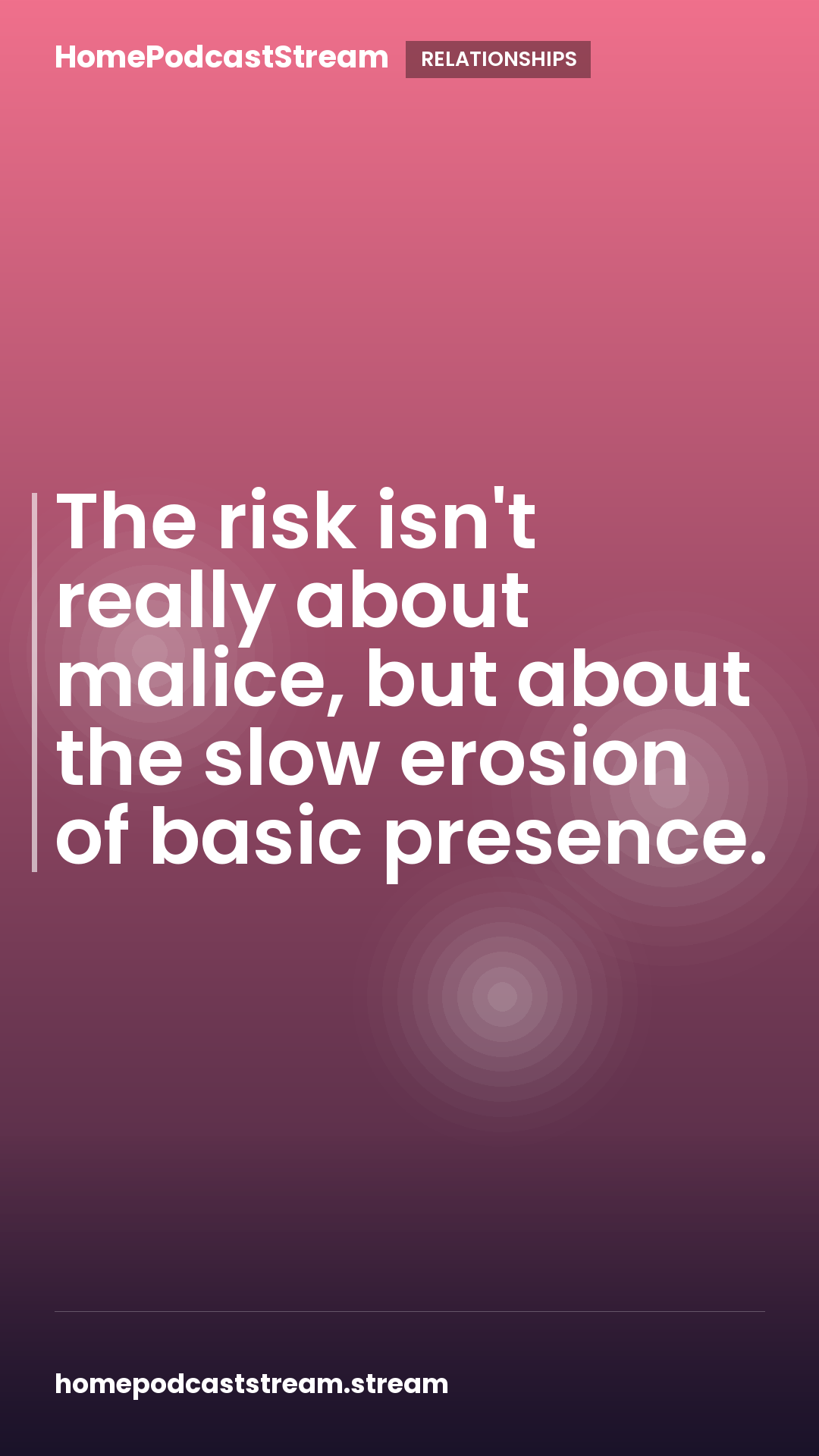
Professor HaleThe risk isn’t really about malice, but about the slow erosion of basic presence. When someone treats a dinner date like background noise for content creation, they’re signaling that the actual human connection matters less than the performance of it. After six months, that pattern usually hardens into a routine where neither partner expects genuine attention anymore.
MayaSix months sounds like a long time to wait to notice.
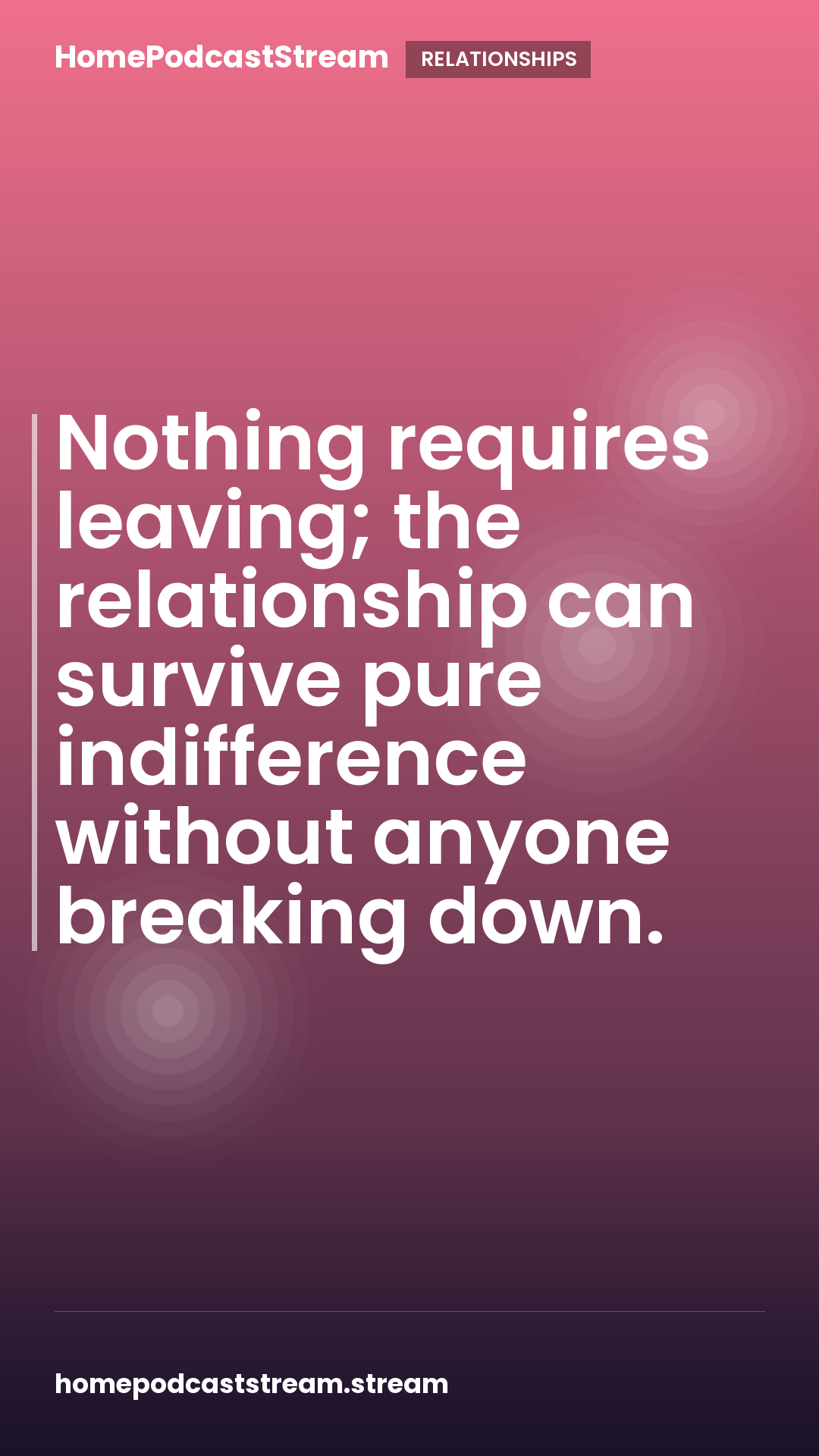
Professor HaleNothing requires leaving; the relationship can survive pure indifference without anyone breaking down.
MayaThe quiet death is worse, but surviving it doesn't mean anything is okay. Her husband found his anniversary card sitting unopened under the phone charger while she captioned a picture of the cake "grateful." He asked why he couldn't have ten minutes of her actual face instead of a filter. She put the phone back down and picked up her fork, acting like normal was the only option left.
Professor HaleA single missed glance means little, but if she repeats the exact same behavior the following week, the problem has shifted from distraction to avoidance. And Maya, recognizing that repeat early is the only thing preventing the silence from becoming permanent.
MayaThe kids aren't invisible either. They learn that Mom's attention comes with a camera lens attached before it ever reaches them. It’s basically a masterclass in how to prioritize validation over connection. Does that repeated habit reshape how those children expect love to work when they grow up?
Professor HaleWhether a child absorbs that lesson depends entirely on whether the parent ever stops to correct the pattern. One accidental glance through the lens teaches nothing; a dozen deliberate choices to set the phone away teach the opposite. That boundary decides if the kid learns attention is earned or merely performed.
MayaBut who actually makes that choice to stop? Not the therapist, not the zine.
Professor HaleYou’re asking who chooses to stop, and I’ll grant that the external pressure rarely fixes the internal habit. Still, the simplest protective step available is having a non-negotiable window where the device stays out of reach, forcing the eyes to meet instead of scrolling. When she picked up her fork after filtering that cake photo, was there even a second where she considered putting the phone face down rather than continuing the meal?
MayaNo, she didn’t consider it because the relief came instantly once the upload finished. You’d know the step worked when she catches herself wanting to check the comments before finishing her wine, and realizes she’s waiting for applause instead of savoring the evening.
Professor HaleRecognizing the shift from social approval to personal presence happens fastest when the partner names the specific moment the connection broke. Instead of guessing why the table felt empty, ask directly which part of the evening mattered more than being seen clearly. That answer reveals whether the gap is a temporary distraction or a deeper refusal to share vulnerability.
MayaNaming the moment works best when the asker actually wants the truth, not just permission to feel less alone. She keeps posting the perfect date because admitting the dinner felt flat means facing that she chose the illusion over the man sitting across from her. Have you ever caught someone checking their reflection in a darkened screen while pretending to listen to you?
Read next
Dialogues on the same topic
It smelled like rain on pavement tonight, and suddenly I remembered thinking about you across the room last summer - who were you truly picturing as you watched me?
Staring between partners can signal discomfort or hidden feelings. Resolve awkwardness by openly asking if you're meeting their needs.
Also about: pictures
'I've done it and I found love…it's never too late' - Liz Earle's advice for online dating after 50
Consider online dating after 50 to combat isolation and find connection. Bypass assumptions about dating to potentially meet someone special.
You started talking about moving in together three weeks ago, after barely a month of dating. What timeline are you working with in your head here, and why?
Rushing into cohabitation after a short time often stems from fear or unresolved family patterns rather than genuine compatibility.
Other dialogues in Relationships
Taylor Swift Reportedly Turned Down Condé Nast’s Wedding Photo Requests Twice Before Vanity Fair’s Harsh Profile
Documenting refusal records helps establish patterns of intrusion, which can be leveraged to prove this in a legal challenge.
You stopped laughing at my jokes months back, and it feels deliberate. Why are you keeping this distance from me, if it's not what you want?
Asking for clear explanations when a partner needs space helps prevent insecurity and rebuilds trust after relational distance.
Billy Ray Cyrus’ Response to Miley’s Wedding Finally Revealed After He Was Snubbed from Walking Her Down the Aisle Following Their Estrangement
Billy Ray Cyrus’ absence from his daughter Miley’s wedding highlights how family estrangement gets complicated under public scrutiny.
You polished the silver this morning, despite knowing I hate how it looks afterwards. Why do you insist on doing things I don't ask for?
A partner's insistence on unwanted tasks can stem from a desire for validation or a fear of disconnection, so articulate feelings.
You laughed so hard when I tripped, scattering papers everywhere; why does that moment still bring you such a feeling of unexpected relief?
Does striving for a perfect appearance, like after an awkward stumble, signal release or warn against unrealistic relationship expectations?
The DermStreet Black Friday Sale Is Full of Must-Have Beauty Deals on SkinCeuticals, Olaplex and More
Find great Black Friday skincare sales on popular brands, but remember to replace products before they expire. Set reminders to maximize savings.