People Born In The 60s, 70s, 80s & 90s Think They’re Entitled To Different Things From Their Parents
 Tom
 Carol
In short
Generational differences in financial expectations create tension between parents and adult children. Some older adults believe independence requires immediate self-sufficiency, while others acknowledge the current economic realities make this difficult for younger people. Gradually reducing financial assistance allows children to develop budgeting skills.
One idea raised: Step back slowly from providing financial support, allowing your adult children to practice managing unexpected expenses like a broken furnace.
Say: I get scared when we are distant, and I need to hear from you.
Lines worth sharing
Each one is a ready picture: share the link and it appears as a card in the feed, or save the image. Cards marked ▶ Video also come as a short clip with music: tap to watch, then save or share it.
Helps when: My family is in the way
TomYou think you have to pay for things because that’s how it’s always been done, right? Then someone born later decides they’re entitled to different stuff just because they came after us. Carol, does that make them wrong, or does it just make me feel like I’m holding onto something that doesn’t fit anymore?
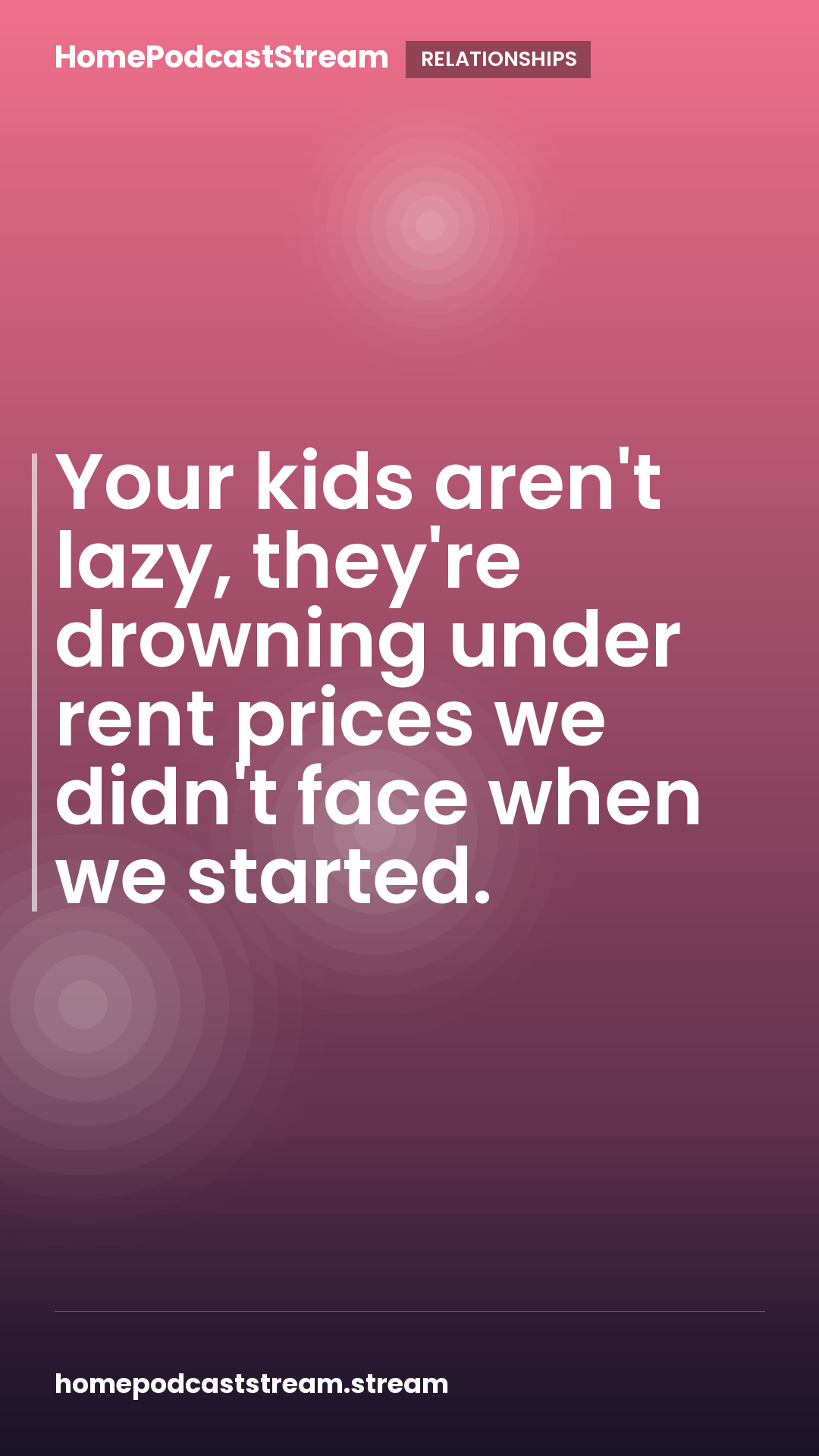
CarolYour kids aren't lazy, they're drowning under rent prices we didn't face when we started. Expecting twenty-six-year-olds to survive alone ignores the actual financial wall they're hitting every month. It’s less about entitlement and more about the math simply not working out for them anymore.
TomRent isn't the whole picture though. The article says sixty-somethoughters believe independence is workable, so why wait around for help when you can build it? That mindset gets people moving faster than standing still.
CarolBuilding it takes money you don’t have sitting in a drawer, Tom. A twenty-five-year-old saving for a down payment while paying $1,800 rent isn’t choosing comfort over effort. They’re just stuck where the numbers won’t budge.
TomThat math works against us too when we look back. There’s this young couple where the husband finally found the extra cash to pay off a loan. He told her they could stop sending money home that month without missing anything. She spent the whole week calculating how much less she’d need to save for rent because of it. The next morning, he called his mom and asked if they still needed help covering groceries until payroll.
CarolCalling Mom for groceries before payroll hits is just the modern version of checking the fridge for milk. You do the mental math on Tuesday, then wonder Wednesday if you remembered to buy eggs. That weekly panic about small expenses is what keeps parents hooked into the budget long after the house keys changed hands.
TomCareful, that framing makes parents sound like unpaid accountants.
CarolUnpaid bookkeeping misses the bigger issue here. Parents become the emergency fund because there are none left in the system. If a child stops calling for support despite having stable income, that signals readiness to stand alone. Where does the body tension go once the financial lifeline is cut?
TomNo, the tension stays put because the safety net never actually got pulled away. We kept handing over checks even after they bought the car, which taught them our anxiety was their backup plan.
CarolYou handed over the check, sure, but did they sign a receipt saying "never call again"?
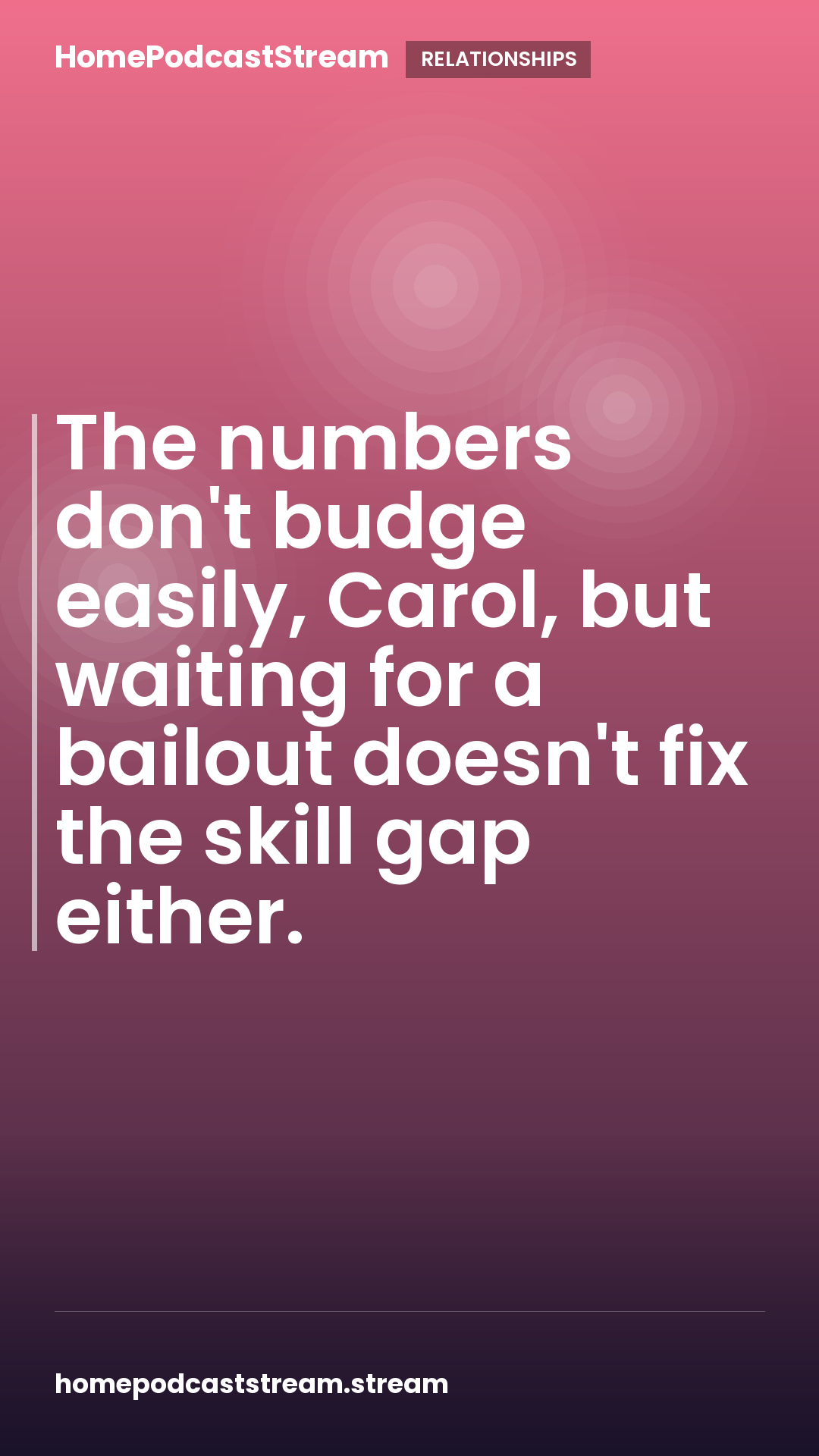
TomThe numbers don’t budge easily, Carol, but waiting for a bailout doesn’t fix the skill gap either. When that young couple calculated how much less rent they’d need, they proved they could manage without us. Stopping the grocery calls builds the exact independence we all want to see.
CarolProving they can handle one bill doesn’t mean they’ve built a habit. One clean payment is a blip, not a pattern. Real independence looks like six months of silence, not a single green circle on an app. Until that streak happens, the parent’s wallet stays loaded. Six weeks isn’t enough to call anyone self-sufficient when the safety net is right behind the phone.
TomSix months sounds nice on paper, but nobody has that kind of runway anymore. The article says younger generations struggle to stand on their own feet, so expecting total silence ignores the actual debt load they’re carrying. We should stop treating every phone call as a character flaw and start seeing it as survival.
CarolSurvival is fair game, but treating parental money as a permanent subsidy skips the lesson entirely. A kid who pays off student loans still needs to learn how to budget for a broken furnace before calling Dad. That muscle only grows when the cash flow actually stops.
TomA furnace breaks without asking permission, and I’ll grant you that part. But I’m sticking to my guns: pulling the plug overnight doesn’t build skill, it just builds resentment between neighbors who share a wall. Parents need to step back slowly so kids learn to fix things themselves, not just wait for a rescue team.
Read next
Dialogues on the same topic
'I felt like I wasn't entitled to sexuality and pleasure': On intimacy and disabilities
Societal views and beliefs about disabled bodies can exclude people with disabilities from experiencing sexuality and pleasure.
Also about: entitled
Rs 15L wedding vs Rs 45L loan: Bengaluru CA Meenal Goel warns of ‘5 years of financial pressure’ with Rs 1
Large wedding loans, like those warned about by Bengaluru CA Meenal Goel, can cause financial stress and shift conflict resolution.
Also about: loan
You were told "you're so independent" as praise for fifteen years and later realized it meant "we don't have to show up" — whose convenience was your independence?
Partnership struggles arise when independence hides avoidance of responsibilities. See how praising self-sufficiency may disguise an unequal sharing of effort.
Also about: independence
Other dialogues in Relationships
Melania Makes Official Comment on Barron’s ‘Dangerous’ Dating Life as She Claims Multiple Women Are ‘in Love with’ Her Son
Examine Barron's dating life commentary and consider if expressions of concern truly support or subtly restrict a young adult's independence.
Your husband wants to move across the country for a job, twice in a decade without asking how you feel about leaving your life behind — is that ambition, or is that one-sided?
Frequent marriage relocation due to work can build resentment and erode connection. Observe whether he prioritizes travel or cherished, shared comforts.
The Traitors: New Blood’s Katie & Victor Finally Reveal if They’re Dating After the Show: ‘Let’s See…’
Katie and Victor’s connection demonstrates ways to approach relationships after filming, emphasizing direct communication and attentive responses.
Psychology says fathers often take the empty nest harder than mothers expect — they just show it in these 8 quieter ways
Empty nest syndrome affects fathers too, often subtly. Talking openly and seeking support can prevent quiet sadness from becoming a long-term issue.
The silence between us felt different after that party - more deliberate. How do you stop yourself from pulling away when things get too loud?
Distance in relationships can create silence and uncertainty, but daily check-ins offer a path forward. Asking 'How are you doing?' shows care.
Four days since we argued about boundaries, and you still sleep with your phone on the pillow. Who decides where those lines get redrawn now?
Prioritize connection over digital distractions—try saying ‘Your presence here beats every notification,’ especially when phones are nearby.